The Very Basics
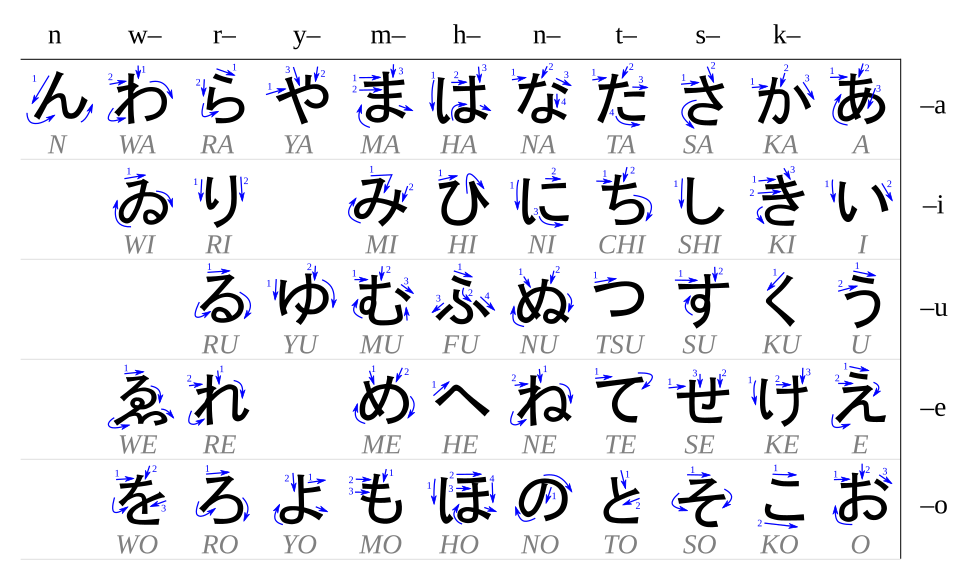
Even starting will be impossible for anyone, if they do not have a mastery of Hiragana. This is partly because Japanese grammar in itself relies heavily on Hiragana for near-everything. Many times, books and other media will explain how a Kanji is meant to be read by annotating it with Hiragana (this specific version is called "Furigana" but it is functionally equivalent, as in they are still Hiragana characters). And of course, the entire phonetic basis of the language is viewed through the lens of Hiragana. It is of vital importance therefore that one learns them sooner rather than later.
Learning Hiragana
1
Learning Katakana
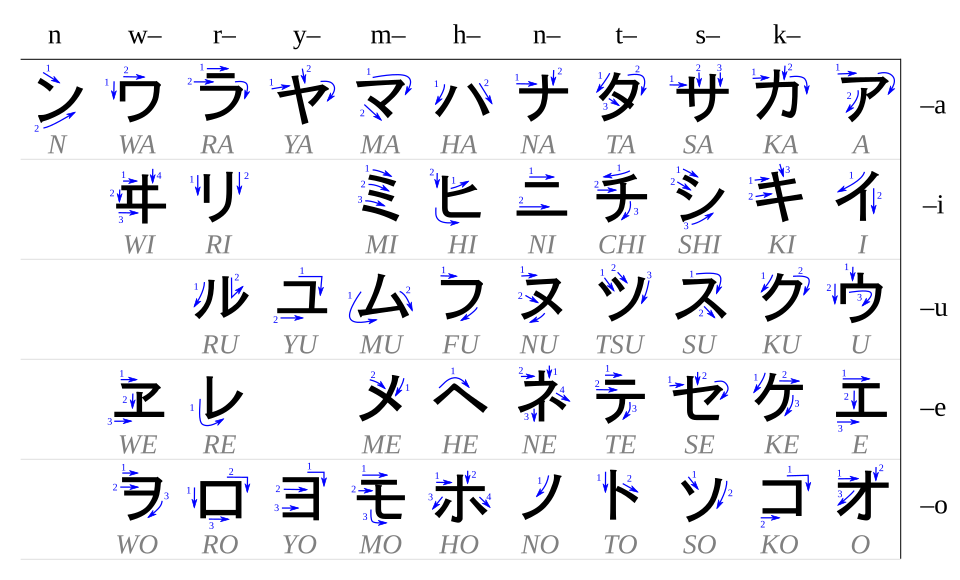
While you're at it, you might as well learn the Katakana. In modern
Japanese, Katakana get a lot of usage, and therefore you will run into
them very often as well. What worked for me was writing the Hiragana
and Katakana for each phonetic unit back to back so that the
association would stick (i.e. writing あ and then ア). Yes the Hiragana
and its respective Katakana generally look very dissimilar. Yes, most
Katakana look very similar to each other. It is what it is. Much like
Hiragana, you can safely ignore "wi" and "we". "wo" will ever
only be used as a particle, and even then very rarely (its Hiragana
version is what is used in 99.99% of cases), so you can safely ignore
that as well.